Roof Flashing: What It Is and Why It Matters
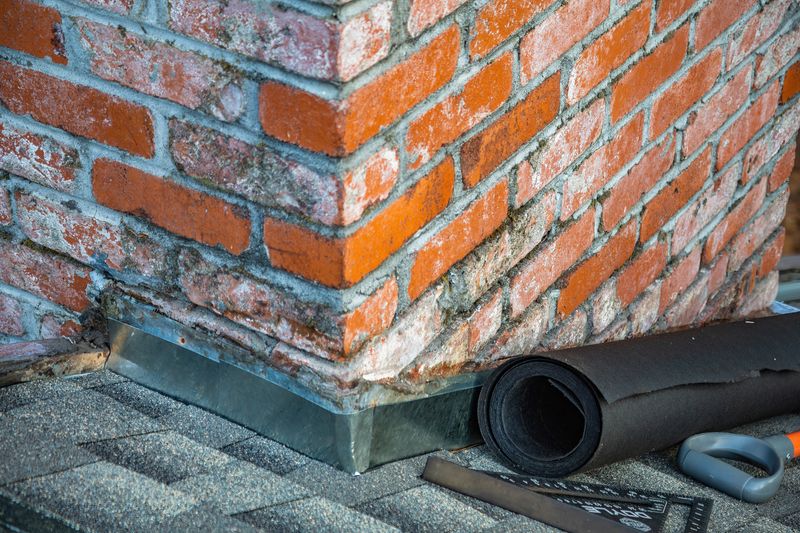
If you’ve had a roof leak around a chimney, skylight, or roof-to-wall joint, the flashing is one possible source. Flashing is the system of formed pieces that helps direct water across vulnerable joints and transitions. Shingles, underlayment, penetrations, masonry, and condensation can produce similar symptoms, so the stain location alone does not identify the failed component.
Understanding what flashing is, where it’s used, and how to spot problems can save you from significant water damage.
Roof-access safety boundary: Do not climb onto a roof to diagnose or repair flashing. Roof access belongs to qualified workers who have evaluated the surface, weather, access method, and suitable fall protection. Homeowners can document symptoms from the ground or a safely accessible interior area and hire a qualified roofing professional for rooftop inspection and repair.
If you are already comparing repair bids, use our roof flashing repair cost guide to distinguish a limited reseal from localized metal work or complete reflashing and to check exclusions line by line.
What Is Roof Flashing?
Roof flashing is a formed water-shedding component installed at many roof penetrations, joints, edges, and transitions. Sheet metal is common, while some roof systems also use flexible or molded flashing products. Each detail must direct water onto the drainage plane without depending on exposed sealant alone.
Common flashing materials include:
- Galvanized steel — widely used and available in several coatings and thicknesses
- Aluminum — lightweight and easy to form, but potentially incompatible with some sealants or adjacent materials
- Copper — corrosion-resistant and visually distinctive as it weathers, but generally more expensive
- Lead — malleable and present in some older assemblies; handling and use are subject to health and environmental requirements
The correct material depends on the roof covering, adjacent metals, masonry, fasteners, climate, adopted code, and manufacturer instructions. Mixing incompatible metals or using an unapproved coating or sealant can shorten the assembly’s service life.
Where Flashing Is Used
Chimney Flashing
Water appearing near a chimney may enter through base or counter flashing, cracked masonry or mortar, a cap or crown, or an adjacent roof component. A roofer or qualified masonry professional may need to evaluate more than one trade’s work before naming the source.
Use our chimney flashing leak diagnostic to compare weather patterns, interior and attic clues, and ground-visible conditions before approving a patch or complete reflash.
Chimney flashing consists of several layers:
- Base flashing at the bottom of each chimney face (step flashing on the sides)
- Counter flashing that overlaps the base flashing and is embedded into the masonry mortar joint
- A cricket or saddle behind wide chimneys — a small peaked structure that diverts water around the back of the chimney
Some adopted codes, project designs, and roof-system instructions require a cricket for wider chimneys or other upslope obstructions. The contractor should verify the applicable requirement and make sure the detail drains water without creating a debris pocket.
Step Flashing
Step flashing seals the joint where a sloped roof meets a vertical wall — such as where a house wall rises above the roof. It consists of individual L-shaped pieces integrated with successive shingle courses:
- Each shingle course gets its own piece of step flashing
- Each piece overlaps the one below by the distance required by the adopted code and roof-system instructions
- The vertical leg of the L turns up against the wall; a counter flashing piece covers it
This interlocking design means water must make multiple direction changes to penetrate — an effective system when properly installed.
Valley Flashing
Where two roof planes meet in a “V,” significant volumes of water concentrate. Valley flashing comes in two forms:
- Open valley: A visible strip of metal (W-shaped in cross-section) runs the length of the valley. Water flows down the metal channel.
- Woven valley: Shingles from each slope are woven together over the valley. No visible metal, but the shingles themselves must extend well past the centerline.
- Closed-cut valley: Shingles from one slope run through the valley; shingles from the other slope are cut to a straight line a few inches from the center.
The appropriate valley detail depends on roof covering, slope, climate, manufacturer instructions, and local requirements. A visible metal valley is not automatically superior to every correctly designed closed system.
If water appears near this transition, use the roof valley leaking decision aid to separate valley drainage, covering, lining, or deck problems from a chimney, wall, vent, or other entry point farther uphill.
Drip Edge Flashing
Drip edge is an L-shaped metal strip installed along the eaves and rakes (sloped edges) of the roof. It:
- Directs water off the roof edge and into the gutters rather than down the fascia
- Protects the roof deck edge from water wicking back underneath
- Provides a clean, finished edge to the roofline
Drip-edge requirements depend on the adopted code and roof system. For shingle roofs under the 2024 IRC provision, underlayment laps over the metal at eaves and beneath it at rakes. Our roof drip edge repair and replacement guide covers sequencing, corrosion signals, gutter coordination, and estimate questions.
drip edge flashing
Vent Pipe Flashing (Boot)
Every plumbing vent pipe that penetrates the roof needs approved flashing at the roof line. A common asphalt-shingle detail uses a flexible collar joined to a base flange, while other products use formed metal bodies or replaceable inserts. The selected product controls the shingle laps, fastening, and sealing details.
Cracked collars, open seals, damaged flanges, exposed fasteners, and poor shingle integration can all admit water. Our roof vent pipe boot leak guide explains how to confirm the source, compare limited repair with full replacement, and evaluate quote variables without assuming every nearby stain came from the boot.
Replacement pipe boots
Skylight Flashing
Skylights can leak when their flashing, glazing, seals, or surrounding roof materials are damaged or poorly integrated. Many current skylight systems use model- and roof-covering-specific flashing kits. Potential problems include:
- Using generic flashing rather than manufacturer-matched kits
- Improper step flashing on the sides
- Field-made patches or sealants that conflict with the skylight or roof-system instructions
Kickout Flashing
Kickout flashing is an often-overlooked piece that goes at the bottom of a roof-wall junction where it meets a gutter. Without it, water flowing down the step flashing onto the last course of shingles runs directly into the wall where it meets the gutter — causing significant rot damage inside the wall.
A missing, undersized, or poorly integrated kickout can contribute to concealed moisture damage in the wall below.
How to Spot Failing Flashing
Regular visual inspections from the ground or from inside the attic can catch problems early.
From inside the attic, look for:
- Water stains on sheathing near chimneys, skylights, or walls
- Daylight visible at roof-wall junctions
- Rust stains on metal flashing
From outside (with binoculars if needed), look for:
- Visible gaps between flashing and masonry
- Rust streaks on flashing surfaces
- Missing counter flashing pieces
- Caulk or sealant pulling away from joints
- Bent or lifted flashing edges
What Roof Flashing Repair May Involve
A small gap may look like a simple sealant repair from the ground, but the visible opening may be a symptom of loose metal, failed laps, movement, corrosion, or deterioration beneath the roof covering. Do not climb onto the roof or apply a generic sealant as a diagnostic shortcut.
If the flashing or roof manufacturer permits a sealant repair, the contractor should use the compatible product, joint preparation, geometry, and application conditions in that system’s instructions. Sealant is not a substitute for correcting a failed flashing assembly, missing metal, improper laps, or damaged substrate.
Bent or missing metal, counter flashing that has pulled from a mortar joint, widespread corrosion, or repeated leakage may require partial or complete reflashing. A qualified roofer or architectural sheet-metal specialist should determine the scope and coordinate masonry or carpentry work when needed.
What Determines Flashing Service Life?
Material alone cannot predict a reliable replacement year. Service life also depends on coating and thickness, fastener and adjacent-metal compatibility, water drainage, movement, workmanship, exposure, maintenance, and the life of adjoining roof components.
When replacing a roof, ask the contractor to document which flashing will be reused, replaced, or newly fabricated and why. The proposal should identify the governing roof, skylight, chimney, or flashing-system instructions and explain how existing metal will be evaluated after surrounding materials are removed.
Flashing is one part of a water-shedding roof system. Document changes from the ground or a safe interior location, respond promptly to active water entry, and have a qualified roofer evaluate suspected failures with suitable fall protection. For planned work, compare written scopes rather than choosing a repair solely by sealant brand or metal type.
See Also
- How to fix a leaking roof — review common leak locations and the professional repair scopes that may address them without treating an interior stain as proof of one failed component
- How to inspect your roof after a storm — use ground-level and interior observations to document possible damage before a qualified rooftop inspection
- Signs you need a new roof — failed flashing is one of ten warning signs covered in this guide to knowing when repairs aren’t enough

Shingle Science Editorial Team
Independent trade-focused editorial team