Cedar shake roof lifespan: How much life is left?
Quick answer
The Cedar Shake & Shingle Bureau gives approximately 30 to 40 years as an average cedar-roof lifespan, while USDA guidance says 25 to 30 years or more is reasonable when a shake roof is properly selected, installed, and maintained. Those figures are planning benchmarks, not a countdown: moisture exposure, ventilation, installation, wood quality, maintenance, and present condition determine whether inspection, repair, or replacement is the right next step.
Common questions
- How long does a cedar shake roof last?
- The Cedar Shake & Shingle Bureau gives approximately 30 to 40 years as an average cedar-roof lifespan. A USDA reference gives 25 to 30 years or more for a properly selected, installed, and maintained cedar shake roof. Climate, grade, installation, ventilation, tree cover, maintenance, and condition can move an individual roof below or above those planning ranges.
- Should a 20-year-old cedar shake roof be replaced?
- Not based on age alone. A 20-year-old roof may be repairable if damage is isolated and the deck and water-control details remain sound, or it may need replacement if decay, lost thickness, severe distortion, and leaks are widespread. Obtain a cedar-specific condition report rather than relying on the installation date.
- What are the clearest signs a cedar shake roof needs replacement?
- Widespread curling, cupping, splitting, softness, or loss of thickness; recurring leaks; broad flashing or ridge failure; and moisture-damaged decking are stronger replacement signals than silver-gray color or a few isolated splits. Active leaks, sagging, or exposed underlayment need prompt professional attention.
- Can maintenance extend a cedar shake roof's lifespan?
- Maintenance can remove moisture-trapping debris and catch repairable defects before damage spreads, but it cannot restore lost wood thickness or repair a decayed deck. Use treatments only when they are compatible, labeled for cedar roofing, and justified by the roof's condition.
Source note: Technical and industry guidance was checked in August 2026 against the USDA Forest Products Laboratory and Cedar Shake & Shingle Bureau. Lifespan ranges cannot predict one roof's remaining service life without a cedar-experienced inspection of the surface, flashings, ventilation, and deck.
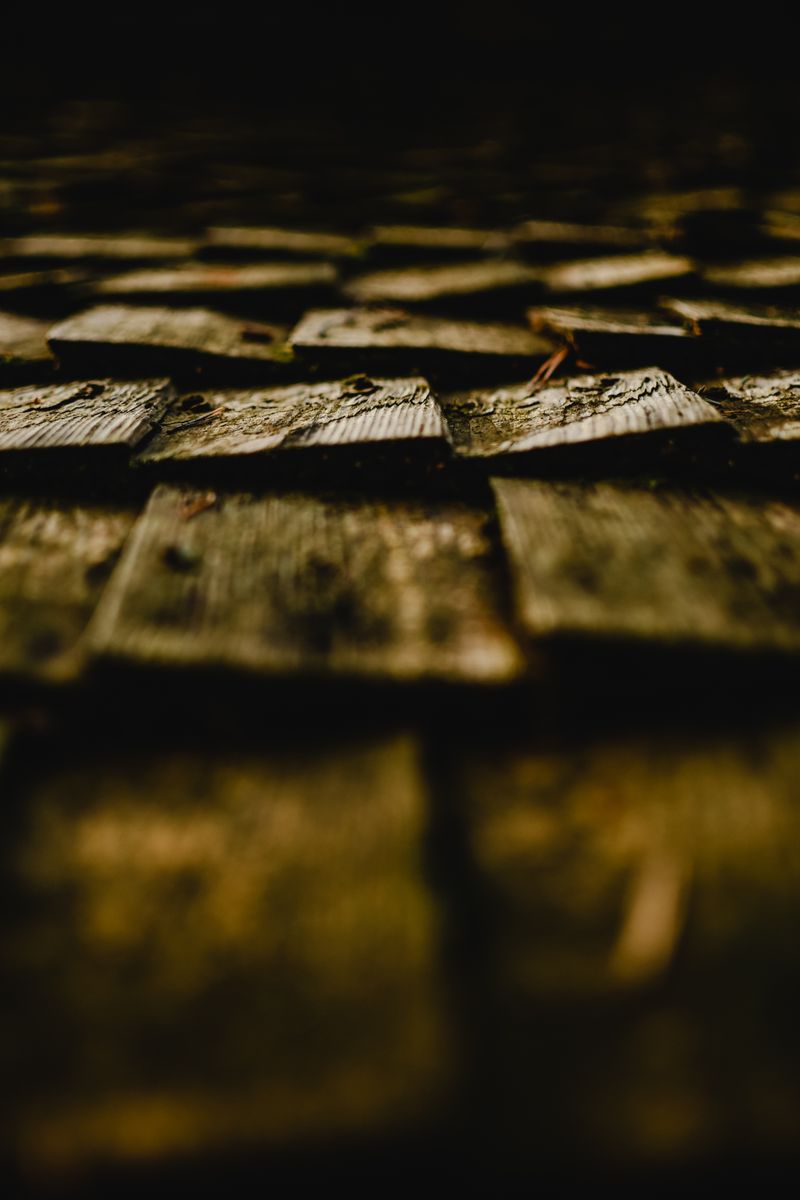
A cedar shake roof often serves for about 30 to 40 years, according to the Cedar Shake & Shingle Bureau (CSSB). A USDA roofing reference gives 25 to 30 years or more when shakes are properly selected, installed, and maintained. Neither figure tells you exactly how much life your roof has left.
A 22-year-old roof that stays damp under trees may be closer to replacement than a 35-year-old roof that dries well and has only isolated damage. Estimate remaining service life from age, exposure, construction, and present condition together—then use an inspection to decide whether to monitor, repair, or replace.
Safety first: Do not walk on an aging cedar roof to test it. Weathered shakes can crack under foot traffic, and the CSSB advises homeowners to leave roof surveys to trained professionals. Use ground photos, binoculars, windows, and accessible attic areas.
What the cedar shake roof lifespan range really means
The CSSB product FAQ describes 30 to 40 years as an approximate average and names wood quality, installation, climate, salt-water proximity, exposure, maintenance, foot traffic, and overhanging trees as variables. A USDA Forest Service roofing reference says 25 to 30 years or more is reasonable when a cedar shake roof is properly selected, installed, and maintained.
These are population-level planning ranges, not a warranty or an inspection result. They also combine roofs built from different species, grades, shake profiles, treatments, assemblies, and eras.
First confirm that the material is actually a shake. Shakes and shingles are separate products, and CSSB guidance says shakes generally last longer, although site and installation factors still control the outcome. Our cedar shakes vs. cedar shingles guide helps identify the product before you apply a lifespan benchmark.
Cedar roof exposure and condition matrix
Do not add or subtract a fixed number of years for any one factor. Use this matrix to decide how much inspection evidence you need and how cautious your planning should be.
| Factor | More favorable evidence | Shorter-life pressure | What to verify |
|---|---|---|---|
| Drying | Open exposure and slopes that dry evenly | Persistent shade, moss, packed needles, or damp areas | Compare shaded and sunny slopes after rain |
| Roof design | Adequate slope, drainage, and ventilation | Low-slope details, trapped debris, or poor attic airflow | Installation records, attic ventilation, and water paths |
| Climate | Moderate wetting with reliable drying | High UV, repeated freeze-thaw, wind-driven rain, or salt exposure | Which planes take the most weather and whether damage matches exposure |
| Material | Documented species, grade, and treatment | Unknown or inconsistent product and undocumented field treatments | Bundle labels, invoices, warranties, and treatment records |
| Workmanship | Correct exposure, fasteners, flashing, and interlayment | High or misplaced nails, open keyways, or failed flashing | A cedar-experienced roofer’s close inspection |
| Care history | Debris control and prompt, compatible repairs | Long-term moss, aggressive washing, coatings, or repeated caulk patches | Photos, invoices, product labels, and repair locations |
The wood must shed water and dry between wettings. The USDA’s installation, care, and maintenance report explains how installation, moisture, finishing, and maintenance interact; the CSSB’s newer cedar-roof longevity guidance emphasizes grade, ventilation, debris, and localized repair. These are technical and industry references, not observations of your specific roof.
Condition checklist: normal aging or failure?
Usually monitor and document
- Uniform silver-gray weathering without softness or leaks. Color change alone is not failure.
- Minor surface checking or isolated splits that do not create a water path. CSSB maintenance guidance says some splitting is normal.
- Slight, scattered movement in otherwise sound shakes. Natural wood does not remain perfectly flat.
- A dry attic, intact flashings, and no pattern of repeat repairs.
Photograph the same slopes and details over time. Follow the observation and debris-control steps in our cedar shake roof maintenance checklist rather than applying a generic oiling or cleaning schedule.
Arrange an inspection and targeted repair
- A few missing, broken, badly curled, or displaced shakes.
- One leak or stain with a traceable, localized source.
- Moss, leaves, or needles holding moisture in valleys and keyways.
- An isolated flashing, ridge, eave, or penetration defect.
- Wide splits that may need individual replacement or a professionally installed metal shim.
Localized damage can remain a repair problem when the surrounding wood, flashing, and deck are sound. Ask the inspector to map each defect, identify its cause, and state whether the repair restores a reliable drainage path.
Start replacement planning
- Widespread loss of thickness or eroded butts, not just surface color change.
- Severe curling, cupping, softness, decay, or splitting across multiple roof planes.
- Recurring leaks after localized repairs.
- Large areas dependent on shims, sealant, or mismatched replacement pieces.
- Broad ridge, valley, flashing, ventilation, or underlayment problems.
- Moisture-damaged decking or structural deterioration beneath the shakes.
The CSSB care and maintenance brochure says no more than 20% of a roof area should be shimmed. Treat that as an escalation point for a broader reroofing discussion, not a universal mathematical replacement rule.
Get prompt professional help
Active water entry, sagging, loose material above occupied areas, exposed underlayment, or suspected structural decay should not wait for an age-based forecast. Protect the interior if it is safe to do so and keep people away from the affected area.
Use age to set urgency, not to make the decision
Age becomes useful after you establish the roof’s condition:
- Unknown age: Search permits, seller disclosures, invoices, manufacturer labels, and dated aerial imagery. Inspect before assuming either remaining life or failure.
- Clearly below published ranges: Investigate installation, storm, moisture, and maintenance causes if deterioration is already widespread.
- Approaching 25 to 40 years: Budget for a cedar-specific condition report and replacement scenarios, even if the roof is currently serviceable.
- Beyond 40 years: Continued service is possible, but base each repair on current surface and deck evidence rather than the historical installation date.
Do not accept a precise “seven years left” statement without findings to support it. A defensible report gives a condition-based range, names inaccessible areas, includes photos, and explains what would move the roof from monitoring to repair or replacement.
Repair, inspect, or replace: your next step
- No leaks and only normal weathering: Create a dated photo record and continue condition-based maintenance.
- Isolated defects or uncertain remaining life: Arrange a cedar-specific inspection. Use our roof inspection cost guide to distinguish a sales estimate from an independent written assessment.
- Widespread deterioration or repeated leaks: Request both repair and replacement scopes, including deck, flashing, ventilation, disposal, and code requirements.
- Replacement is likely: Use the cedar shake roof cost guide to normalize bids. Confirm local fire, building-code, insurance, and product requirements before choosing another cedar assembly.
The practical goal is not to force your roof into an average. It is to document whether the assembly still sheds water reliably, identify repairable failures early, and plan replacement before recurring leaks make the decision for you.
Sources
- Cedar Shake & Shingle Bureau product FAQ
- Cedar Shake & Shingle Bureau: How long does a cedar roof last?
- Cedar Shake & Shingle Bureau care and maintenance brochure
- USDA Forest Products Laboratory: Installation, care, and maintenance of wood shake and shingle roofs
- USDA Forest Service: Best practices for roofing against wind, wildfire and hail
Turn cedar roof condition into a next step
Use these related guides to identify the material, maintain it correctly, scope an inspection, and prepare for replacement costs.
- Cedar shake roof maintenance
Use a seasonal checklist without assuming a universal treatment schedule.
- Cedar shake roof cost
Compare complete replacement scopes instead of relying on one national price.
- Cedar shakes vs. cedar shingles
Confirm which wood-roof product you have before applying a lifespan range.
- Roof inspection cost
Decide when a paid condition report is more useful than a sales estimate.

Shingle Science Editorial Team
Independent trade-focused editorial team